Breaker Sizing: NEC 240.6 Standard Ratings and the Next-Size-Up Rule
How to size a circuit breaker the way the NEC does it — 125% on continuous load, round up to a 240.6(A) standard rating, then prove the conductor can live with it under 240.4.
How to size a circuit breaker the way the NEC does it — 125% on continuous load, round up to a 240.6(A) standard rating, then prove the conductor can live with it under 240.4.
Two different ground wires, two different tables. How to size an equipment grounding conductor from the breaker and a grounding electrode conductor from the service — with the full tables, the 250.122(B) upsize rule, and the ground-rod allowance.

How to lay out a staircase — riser count, riser height, going, total run, and pitch — checked against IRC R311.7, NBC 9.8, and Approved Document K.

How to calculate residential service load with the NEC Article 220 standard and optional methods — required for service sizing and permit applications.

How to calculate heating and cooling loads using Manual J — the ACCA standard method. Covers the inputs, the math, and why rule-of-thumb sizing fails.

How to calculate conduit fill correctly using NEC Chapter 9 tables — maximum fill percentages, wire area lookup, and common mistakes that fail inspection.

How to size water supply pipes, drain/waste/vent systems, and gas piping correctly — with the IPC and NFPA 54 references behind each calculation.

Step-by-step concrete volume calculations for common pours — footings, slabs, walls, and columns. Includes waste factor guidance and ordering tips.

How to size supply and return ducts correctly using the equal friction method — the ASHRAE standard approach used by HVAC professionals.

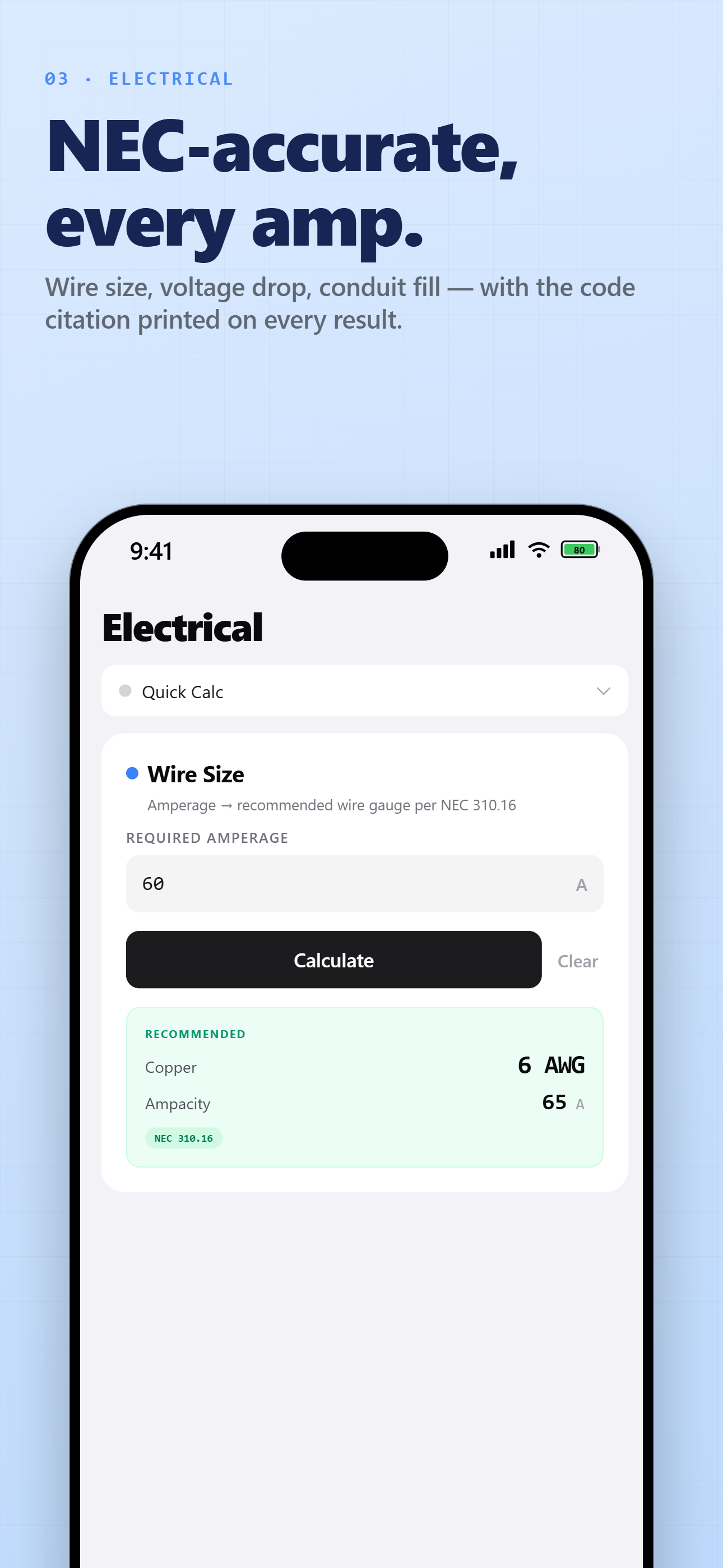
A practical guide to NEC-compliant wire sizing and voltage drop calculations for residential and commercial work — with the exact formulas used in FieldDojo.